Carl Jung's shadow self is the part of your personality you don't recognize as yours: the traits, urges, and emotions you learned to hide as a child. Because you're not aware of it, it tends to show up in patterns that keep repeating and in outsized irritation at other people, until it starts to feel like fate.
What is Carl Jung's shadow self?
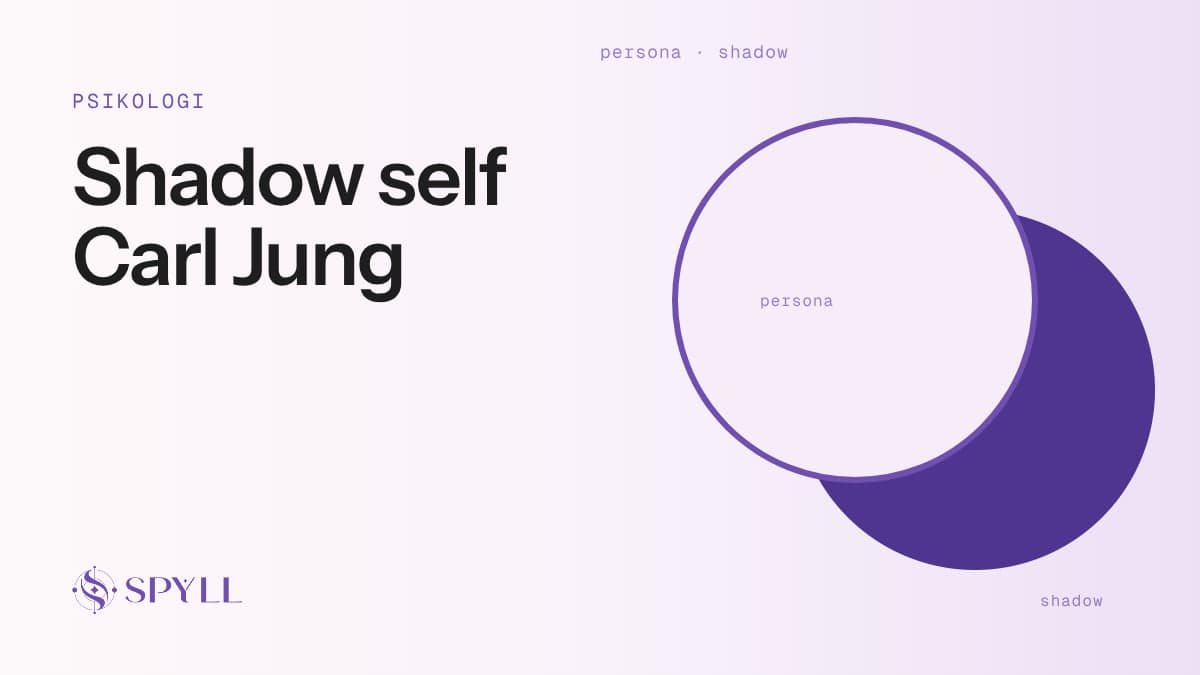
Jung wrote that the shadow personifies everything a person refuses to acknowledge about themselves and yet keeps running into, such as inferior traits of character and other tendencies that don't fit their self-image. The line comes from the essay "Conscious, Unconscious, and Individuation" in The Archetypes and the Collective Unconscious, volume 9, part 1 of his Collected Works.
The shadow isn't the same as your evil side. It can hold the anger you were always told off for, but also things that are perfectly healthy, like ambition or wanting to be looked after, that your family treated as embarrassing. A kid who's told to calm down every time they get angry can grow into an adult who says "I'm just not an angry person". A kid praised for being independent can grow into someone who never asks for help.
A quote that often goes around as "until you make the unconscious conscious, it will direct your life and you will call it fate" is a paraphrase. Jung's own version is in Aion (volume 9, part 2), and it runs roughly like this: when an inner situation isn't made conscious, it happens outside, as fate.
Projection: why someone else's trait can get under your skin
Projection is the easiest way to spot the shadow. Marie-Louise von Franz, Jung's student and longtime collaborator, wrote in her chapter "The Process of Individuation" in Man and His Symbols (1964) that when people try to see their shadow, they become aware of, and often ashamed of, the qualities and impulses they deny in themselves but can plainly see in others.
The tell is usually a reaction out of proportion to what happened. Some illustrations:
- A coworker openly chasing a promotion drives you up the wall, even though it costs you nothing. You may be sitting on ambition of your own that you keep down so you'll still look modest.
- You get annoyed every time your partner breezily turns down a family invitation, while you've never managed to say no to one.
- You're the strictest person on the team about small typos, and quietly terrified of being seen getting something wrong.
Not every irritation is projection. Sometimes the other person really is annoying. The sorting question is simple: if your irritation is far bigger than the event and keeps coming back with different people, part of what you're seeing may be yourself.
3 signs the shadow is helping make your decisions
1. You blow up over small things
A routine comment like "the report's a day late" lands as an attack on your worth. You only notice you overreacted once the room goes quiet.
2. The pattern stays the same when the people change
You've changed jobs three times and left all three with the same line: "my manager didn't value me". Sigmund Freud called the tendency to repeat painful experiences the repetition compulsion in Beyond the Pleasure Principle (1920). That idea is Freud's, not Jung's, so treat it as a comparison rather than part of shadow theory.
3. You derail your own plans right at the finish line
Your dream interview is tomorrow morning, and tonight you pick a fight, stay up too late, or "forget" to prepare your documents. This sign isn't always about the shadow, since tiredness and nerves do the same thing, so note when it happens before drawing conclusions.
How to start noticing your shadow
Working with the shadow means admitting the urges are there, without having to act on them and without rushing to judge yourself. It builds on the basics of self-awareness, which separate knowing yourself from the inside and knowing how others see you.
- Log the triggers. Each time someone irritates you out of all proportion, write one line: "What trait in this person bothers me most?" After two weeks, one trait usually keeps turning up.
- Ask "what", not "why". Tasha Eurich, writing in Harvard Business Review (2018), found that more self-aware people tend to ask "what" questions rather than "why". Swap "why do I hate them?" for "what about that trait do I secretly want, or fear?"
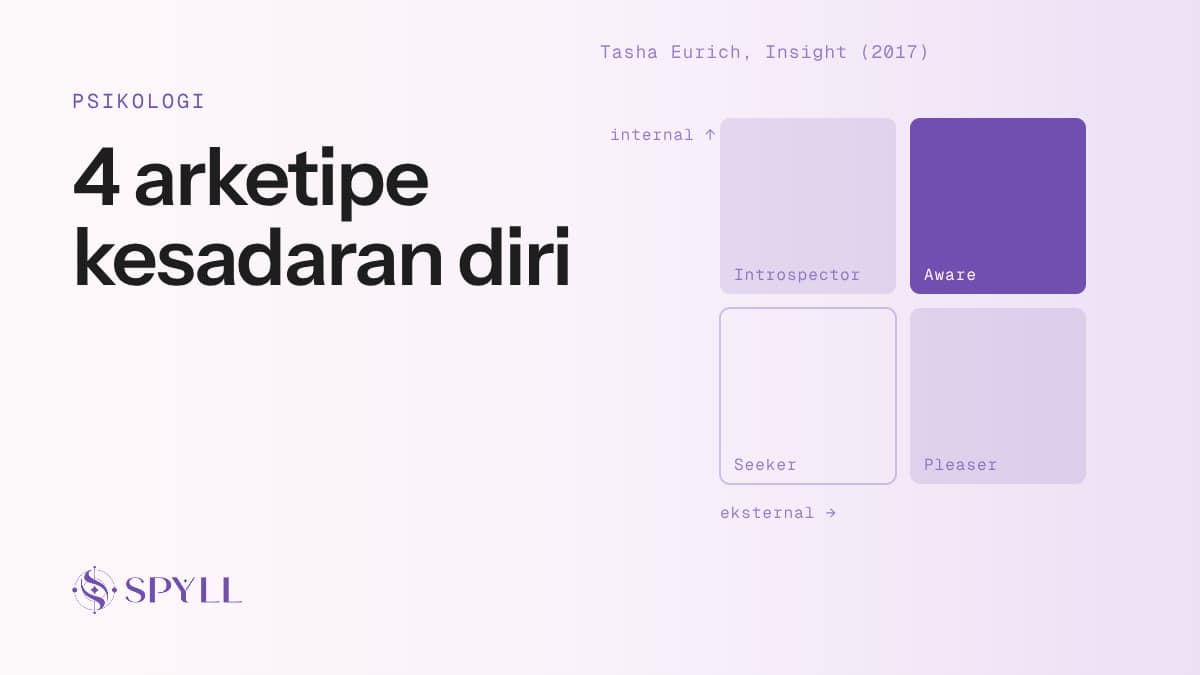
- Know your self-awareness archetype. If you're used to setting your own wants aside to keep people happy, compare yourself with the Pleaser profile in the 4 self-awareness archetypes. If you're sure you know yourself but the people closest to you disagree, read about the Dunning-Kruger effect and self-awareness too.
If this starts making you harder on yourself, stop for a bit. The difference between seeing your darker side and beating yourself up is covered in self-awareness vs self-doubt.
Your weakest BaZi element as a mirror for the shadow
At SPYLL we use BaZi as a mirror, not as a cause. The BaZi calculator counts how the five elements are spread across the eight characters of your chart and flags the one with the least. When we tested the engine, about a third of sampled charts had two or more elements tied for weakest, so you may have more than one.
Your weakest element can be a prompt for questions about the shadow. SPYLL's data links Fire with self-expression and being seen, and Water with recovery and moving around obstacles without a clash. If Fire is your weakest, ask: am I often cynical about people who enjoy the spotlight? If Water is your weakest, ask: do I struggle to stop working because stillness feels uncomfortable?
The answers still come from your own experience, not from the chart. A weak element isn't a gap you have to patch, and two people with the same weakest element can carry very different shadows.
Start with the trigger log, then compare the trait that shows up most with the weakest element in the SPYLL BaZi calculator and your archetype in your SPYLL profile. Where the two point the same way, that's a spot worth watching for longer. This piece is for reflection and doesn't replace a psychologist or counselor, so if what you find feels heavy, talk it through with a professional.
Akhmad Erlangga
· Founder & Framework ArchitectSystems builder focused on personality analytics and self-discovery frameworks. He synthesizes established psychometric models and behavioral dynamics to create structured reflection tools at Spyll.